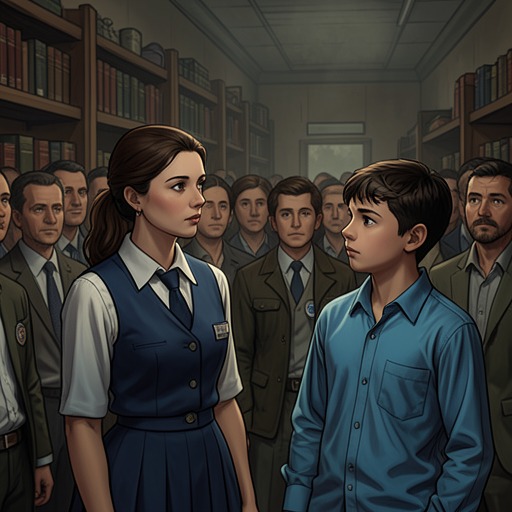
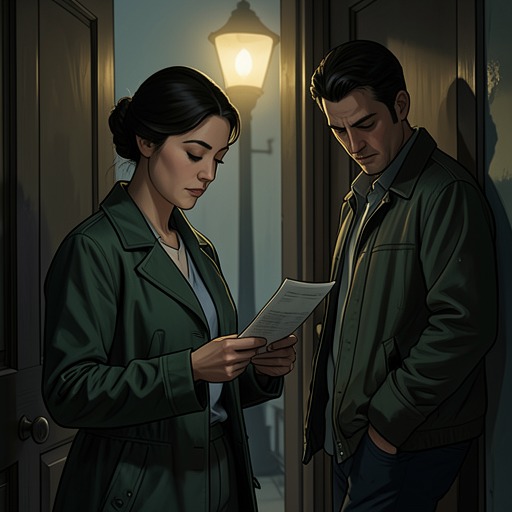
Kanae tries to confess her feelings to Takaki but cannot speak
5 Centimeters per SecondKanae Sumida’s attempt to confess her feelings to Takaki Tohno ends before she can say them aloud. In the ordinary walk home, a choice of coffee, the widening space between two bicycles, and a hand catching the tail of a shirt give visible form to her desire. Takaki’s response turns the moment into a rejection as Kanae understands it, and the later sight of him watching a rocket makes plain the distance she had sensed between them.
The Decision at the Convenience Store
At six in the evening, Kanae and Takaki stand beside each other in front of the drink case at a convenience store. They usually arrive after dark, so the west-facing windows, filled with the setting sun, make the familiar shop feel strangely unfamiliar. The sunlight warms Kanae’s cheek. She already knows what she will buy: the same Daily Coffee as Takaki. When she picks it up without hesitation, his surprise at her quick decision briefly interrupts her private resolve.
Kanae has decided that she must tell him she likes him before they reach her house. Her heart has been unsettled throughout the walk, and she hopes the pop music playing in the store will cover its sound. The setting gives her plan a deadline: she has only the remaining walk to turn a feeling she has kept inside into words. Her outward composure—choosing the drink confidently and answering without looking at him—contrasts with the urgency she feels.
The Unspoken Confession
Outside, the setting sun divides the scene into light and shadow. Kanae and Takaki are in the light just beyond the automatic doors, while the small parking lot where their bicycles are left lies around the corner in shade. Takaki walks toward it with his carton in one hand. Kanae watches his back beneath his white shirt and notices that it is broader than hers; the sight intensifies her longing rather than bringing them closer.
The space between them is about forty centimeters, then grows by another five as Takaki continues walking. Kanae feels suddenly and desperately lonely. On impulse, she reaches out and catches the tail of his shirt. The gesture stops him, but it does not make the confession possible. After a long pause, Takaki slowly turns. Kanae senses a refusal in the moment before he asks what is wrong; his voice is quiet and kind, yet cold, and he is not smiling. His eyes hold a powerful determination. Kanae looks steadily at him, but in the end she cannot say anything. She understands the silence as a firm rejection, as though he has forbidden her to speak.
Recognition Under the Same Sky
The two make their way home while the sun, still barely above the horizon, dyes them a complicated purple. Later, after watching a rocket rise, Kanae and Takaki stand silently beneath the sky until its enormous column of smoke dissolves into the wind. The birds, insects, and wind gradually become audible again; the sun sets, the sky deepens, and stars begin to appear. In that quiet aftermath, Kanae recognizes that they are looking at the same sky but seeing different things: Takaki does not see her.
She understands that his kindness and habit of walking beside her have not meant that his attention was directed toward her. It has always been fixed on something beyond her, something far away. Kanae is certain that she cannot give him what he wants and that they could never be together. The rocket scene thus confirms what the failed confession had made bodily and immediate: proximity is not mutual attention, and standing side by side does not mean sharing the same desire.
Aftermath and Significance
On the walk home after the rocket launch, a round moon lights windswept clouds, while the power lines cut across its face. Kanae reads the image as a division between before and after: before and after riding a wave, and before and after learning what is in Takaki’s heart. She feels that her world has changed completely and that, from the next day, she will live in a different world from the one she knew before. The confession itself never becomes speech; the change comes instead through her recognition of the answer she has received without hearing a direct declaration.
That night, alone in her dark room, Kanae curls up on her futon as moonlight pools on the floor. She begins crying again, then lets herself cry aloud, no longer holding back. Her tears give the unspoken moment a consequence that her silence at the convenience store concealed: she had wanted to confess, but she leaves the encounter with a painful certainty about the limits of the relationship. The event’s emotional turn lies not in a spoken exchange but in the contrast between the short distance separating them and the different futures she now believes they face.